

Parking operators spend millions optimizing traffic flow, system uptime, and user experience.
But there's one area quietly draining revenue every single day, which is:
Merchant Discount Rate (MDR)
Which is not visible, hence usually operators are not complained about. But it consistently taking a cut from every transaction you made. If you're running a multi-channel cashless parking system today, MDR is no longer just a cost, it's a controllable profit driver.
The Problem: Too Many Payment Options, Zero Control
Modern parking sites support everything:

- Touch 'n Go card
- Credit / Debit cards
- DuitNow QR
- eWallets
- Parking apps
This looks great on paper, because it's "more convenience". But operationally, it creates a serious issue:
Each payment method comes with a different MDR.
And if you're not managing it, you are running a randomized cost model.
Two Payment Groupings That Decide Your Profit
1. At Exit — The User Decides
At the barrier gate, the user sees:
- Card terminal (TnG / bank cards)
- QR code on screen
He chooses:
- Tap card
- Or scan QR
Simple action but big impact.
Because:
- TnG card → highest MDR
- Bank cards → mid MDR
- DuitNow QR → lowest MDR
Every user decision directly affects your margin.
And you have almost zero control, unless you design for it. With more available payment options nowadays, you may consider dropping higher MDR payment method if you can't negotiate a better deal with the service provider.
2. Auto-Deduction — The Operator Decides
Now look at pre-registered users with their car plate numbers tie to the auto-deductible app which we called eWallet Direct.
When users link their car plate numbers to some:
- eWallets
- Bank apps
- Parking apps
You can control which payment gets deducted first. This is where operators can finally take back control.
Best practice is simple:
- Prioritize lowest MDR
- Cascade to higher MDR only when needed
Same transaction, different routing. Automatically, it generates higher retained revenue.
The good thing is, with TimeTec automated LPR technology, the Operators-Decides-Auto-Deduction mechanism comes first before the Users-Decide-Payment-Methods.
The Truth Most Operators Ignore

Let's not sugarcoat it. If your average fee is RM5:
- 2.5% MDR → you lose RM0.125
- 1.5% MDR → you lose RM0.075
That's 40% more cost per transaction.
Now multiply across:
- Daily transactions
- Multiple sites
- Annual operations
This is not "processing fee", this is margin erosion at scale.
Why Traditional Systems Fall Short
Most parking systems today:
- Accept multiple payments
- But don't optimize between them
- And don't consolidate the outcome
So operators end up with:
- Fragmented settlement
- Multiple MDR structures
- No visibility on cost vs income
You can't optimize what you can't see.
From Payment Acceptance to Payment Orchestration
This is where the industry is shifting. Forward-looking operators are no longer asking, "Can I accept more payment methods?"
They are asking, "How do I control which payment gets used?"
This is Payment Orchestration.
And it involves:
- Steering users toward lower MDR options (e.g. QR at exit)
- Setting deduction priority for auto-pay users
- Monitoring MDR impact across all channels
- Consolidating settlement into a single view
- Analytics that comparing incomes and savings from different payment methods.
Where Levis Pay Comes In
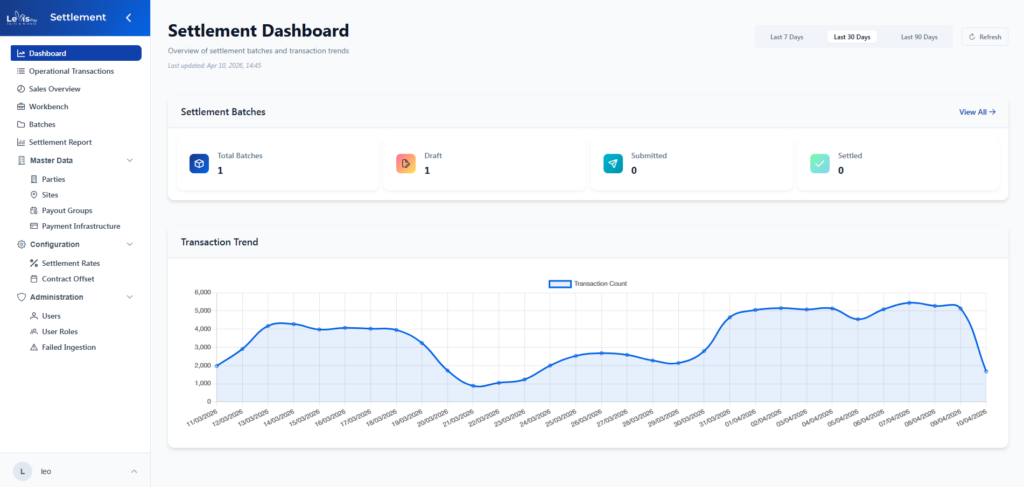
This is exactly the problem Levis Pay is designed to solve. Not just as a payment processor, but as a parking payment aggregator and control layer.
With Levis Pay, operators can:
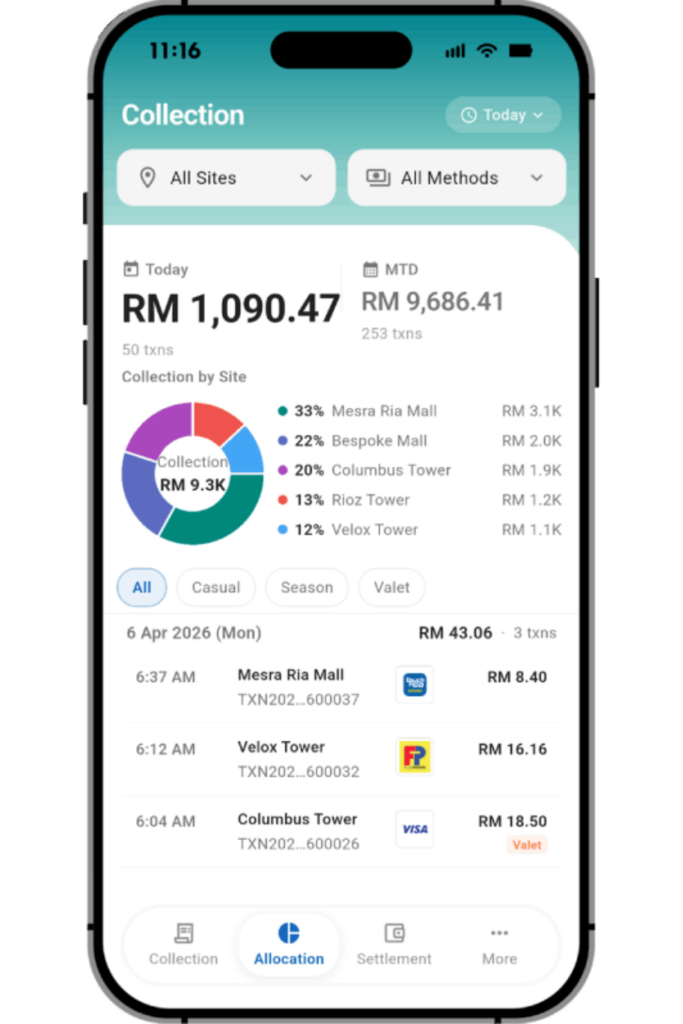
1. Optimize MDR Across All Channels
- Control deduction sequence for auto-pay users via TimeTec Parking Management System, PMS.
- Align payment routing with lowest MDR logic
2. Consolidate Multi-Channel Payments
- TnG, DNQR, bank cards, eWallets — unified
- One settlement view, not five
3. Gain Full Visibility
- Track MDR impact per method
- Analyze net revenue, not just gross collection
4. Simplify Consolidation & Reporting
- One platform to monitor, match, and audit
- Ready for accounting and e-invoicing integration
Conclusion
Cashless is no longer the advantage. Everyone is cashless. Control is the advantage.
If you:
- Let users decide everything → you lose margin
- Accept all payments blindly → you absorb inefficiency
- Ignore MDR → you give away profit silently
But if you:
- Orchestrate payments
- Prioritize low MDR
- Consolidate and monitor everything
You turn the same traffic into higher income. In parking, increasing revenue doesn't always mean more cars and higher parking rates; sometimes, it simply means stop leaking money at the payment layer.